Church of Panagitsa at Aipeia
Title:
Restoration of the Church of Panagitsa at Aipeia, Regional Unit of Messenia
Region:
Peloponnese, Regional Unit of Messenia, Municipality of Kalamata, Local Community of Antheia, Settlement of Aipeia
Operational Programme:
“Peloponnese 2014–2020”

Implementing Authority:
Ephorate of Antiquities of Messenia
Budget:
€185,000.00
Fund:
European Regional Development Fund (ERDF)
Description:
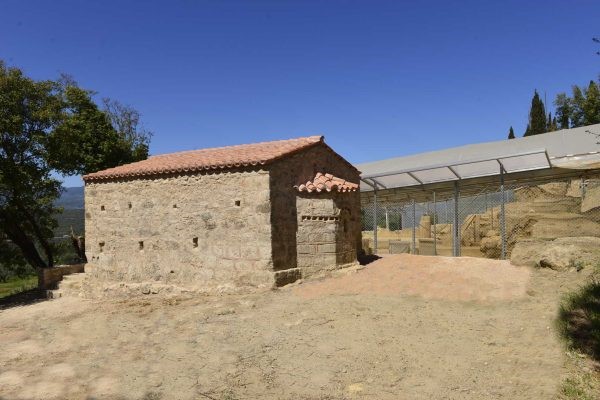
The Church of Panagitsa, a small single-aisled church with a three-sided apse externally and a wooden double-pitched roof, is situated to the east of the settlement of Aipeia, in close proximity to the Sanctuary of Asclepius of Ancient Thouria, within the boundaries of the declared archaeological site of the area.
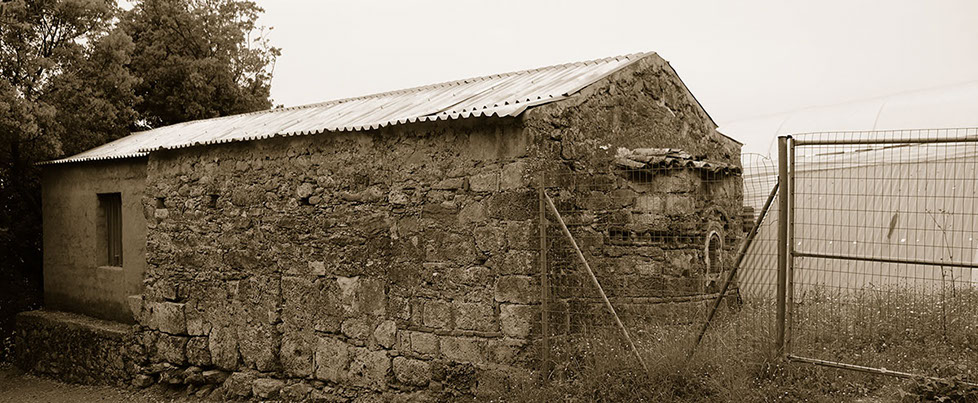
Its initial construction phase dates to the 13th–14th century, with a second phase in the 17th–18th century, while a western extension built of cement blocks, with a modern roof, floor, ceiling, iconostasis, and plaster coatings, represents interventions of the 20th century. Prior to restoration, the monument was in poor condition, having suffered significant damage, while later additions had largely obscured its authentic form.
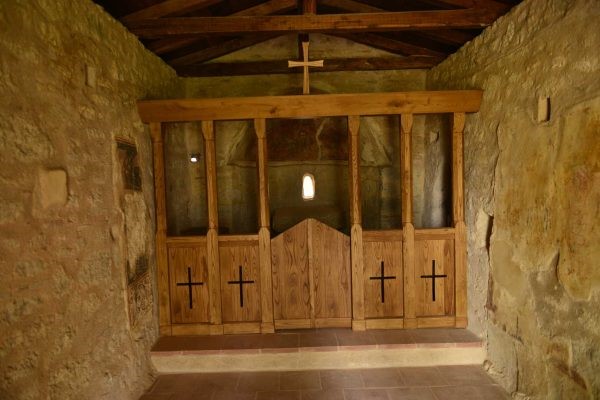
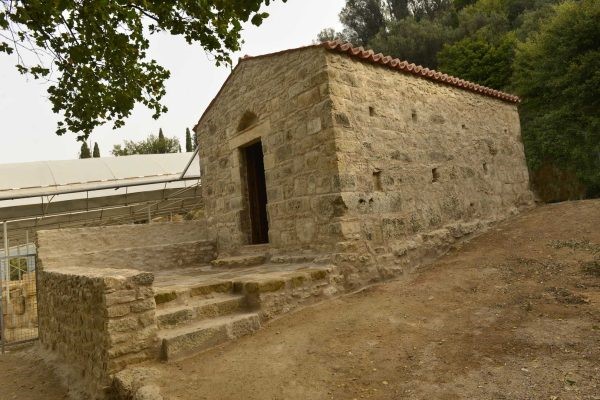
Under the present project, extensive works were carried out both inside and outside the monument, including cleaning of the church and its surrounding area, removal of later additions, and comprehensive restoration to its original appearance. The most significant intervention involved the demolition of the westernmost, later section of the church and the reconstruction of a new west wall along the trace of the original, with the entrance door repositioned at its center. The walls were stabilized and restored, and the foundations reinforced according to the approved structural study.
Subsequently, the wooden double-pitched roof was rebuilt and covered with Byzantine-type tiles. The wall paintings and the holy altar were conserved, while the floor was repaved with handmade ceramic tiles. In addition, the courtyard area to the west and retaining walls to the east and north were constructed, and the entrance to the archaeological site of the Asclepieion was appropriately redesigned.
Benefits:
Upon completion of the project and the removal of the later additions, the monument was restored to its authentic Byzantine form, while the aesthetic quality of its surrounding area was significantly improved. The restoration ensured the structural and visual integrity of the monument, securing its long-term preservation and providing safe access for visitors.
The project contributed to the comprehensive scientific documentation of the church, with all restoration works recorded and archaeological findings duly documented. Informative signage enhances public understanding of the site, while the results of the archaeological investigation will be published in scientific journals.
Ultimately, the project highlights the historical and cultural significance of the monument within its landscape and contributes decisively to the increase in visitor numbers to the important archaeological site of the Asclepieion of Ancient Thouria, thereby enhancing a historically rich area continuously inhabited from antiquity to the present day.