The gold of Messenia
16/11/2023
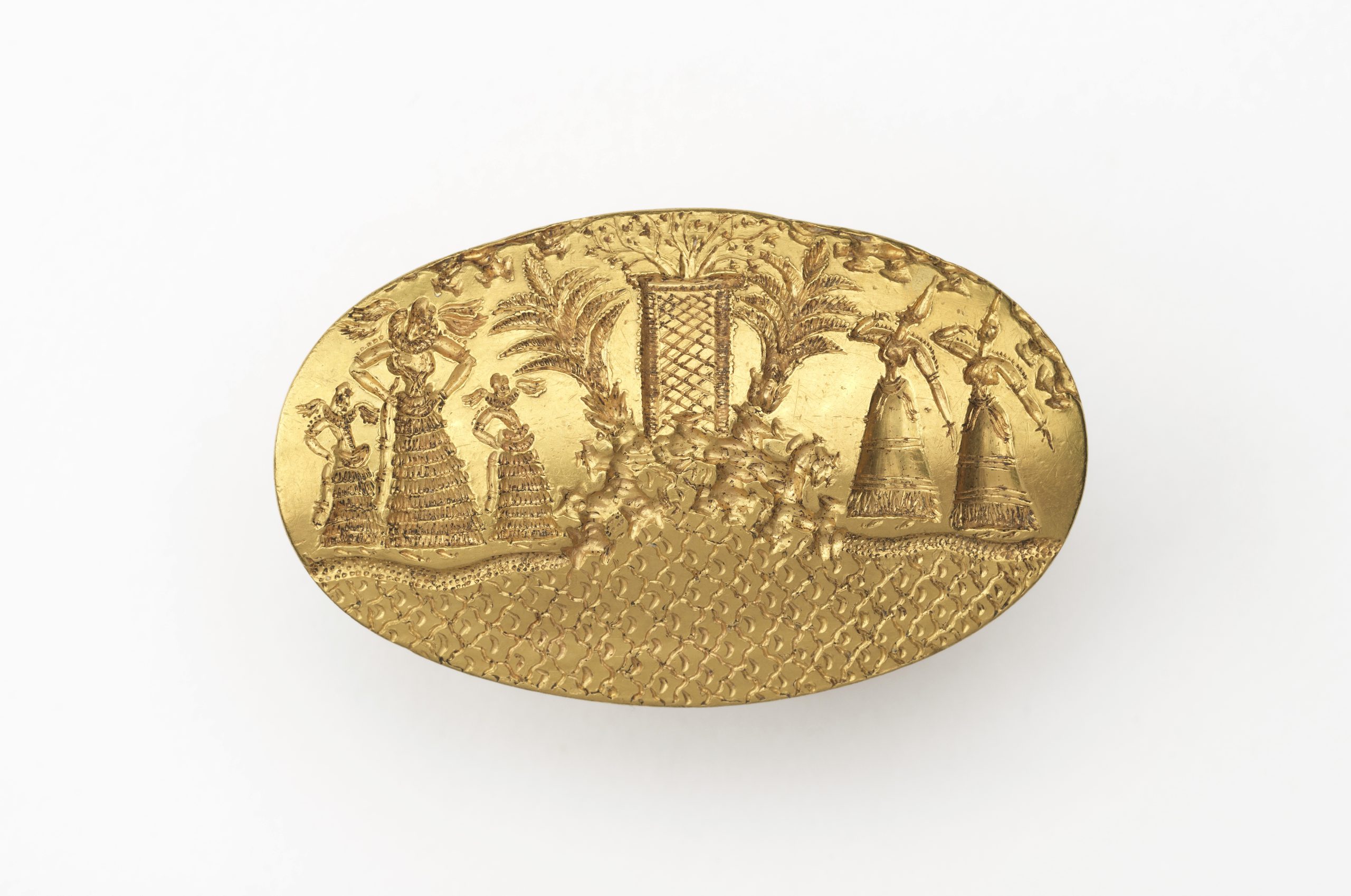
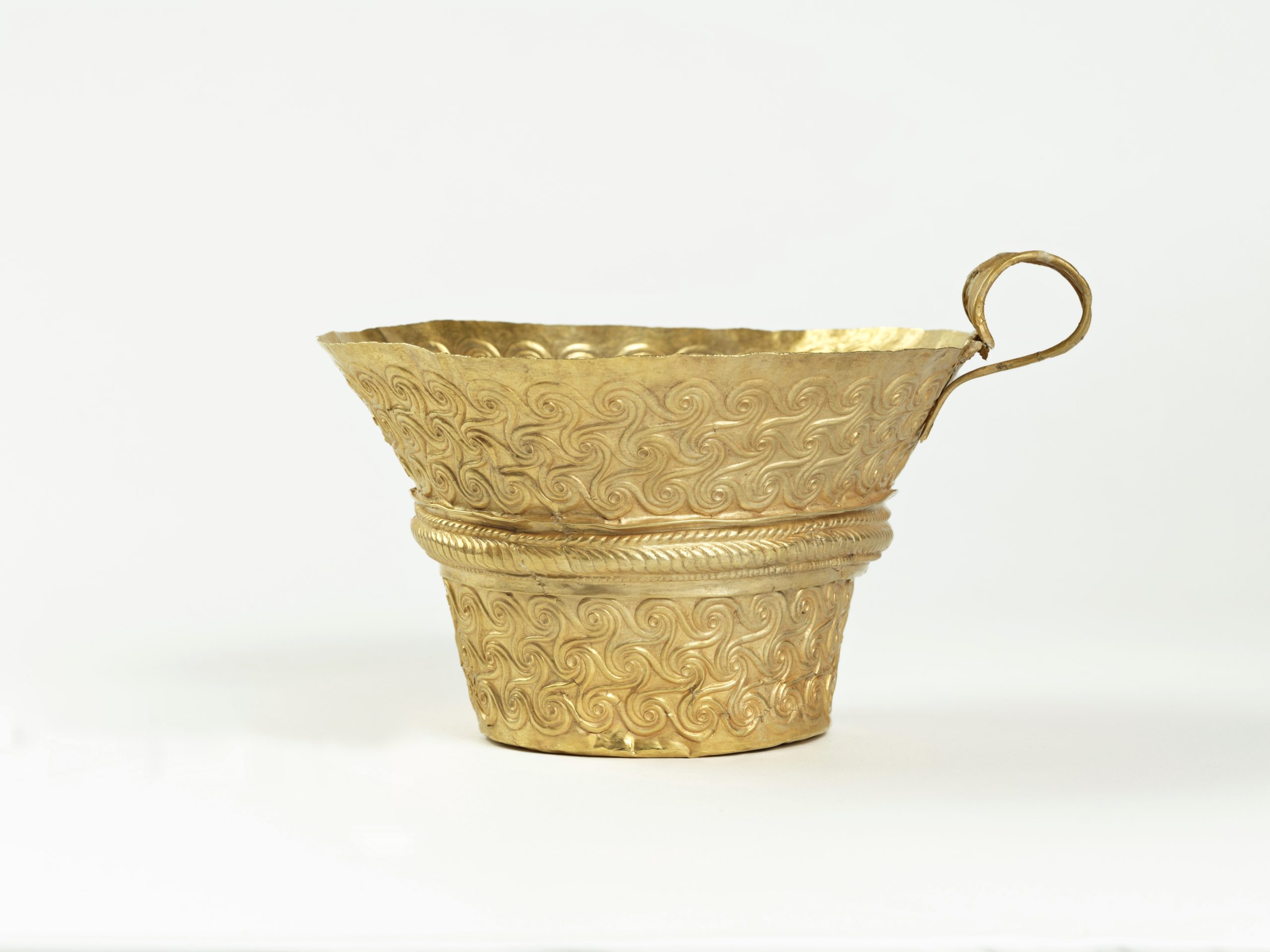
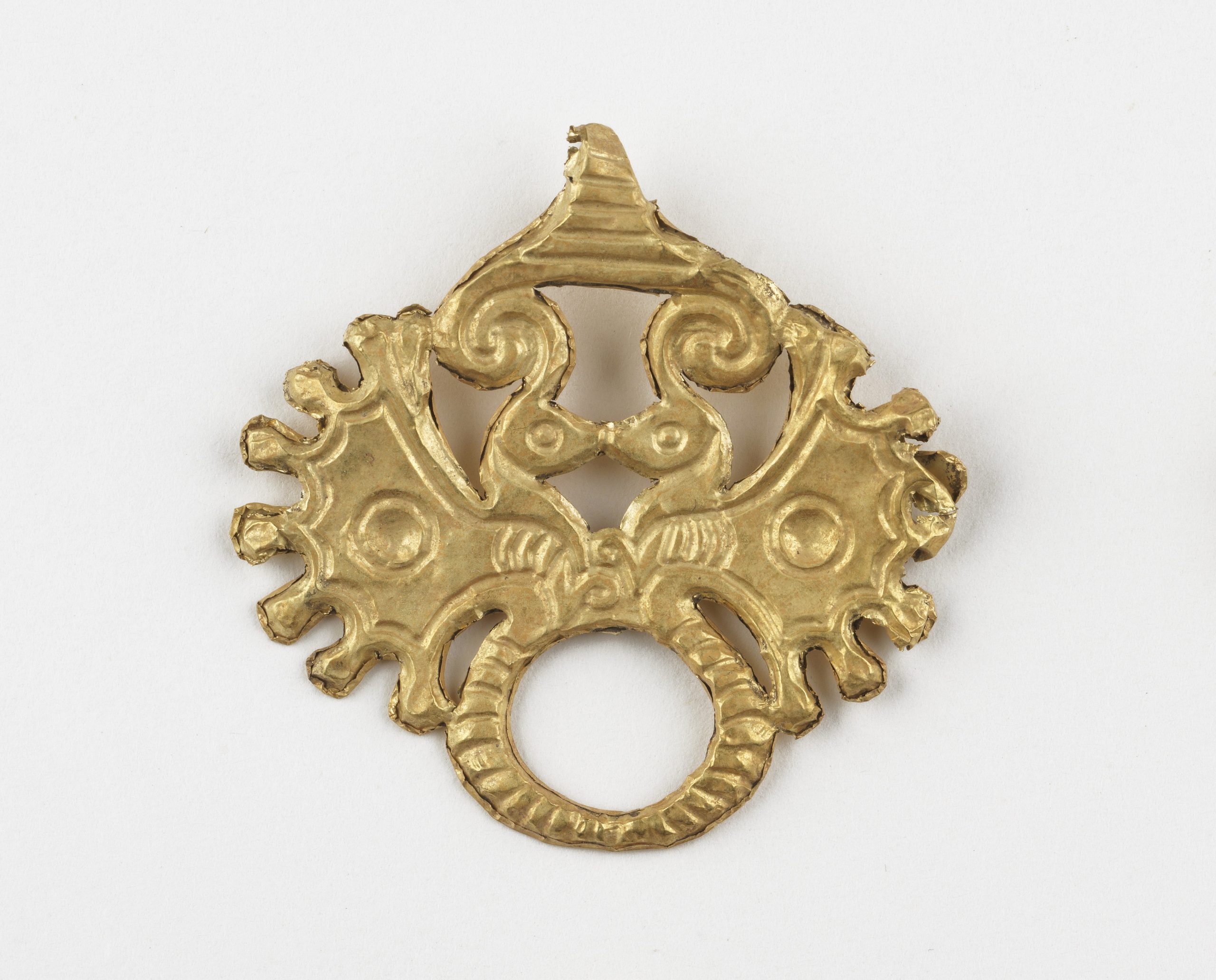
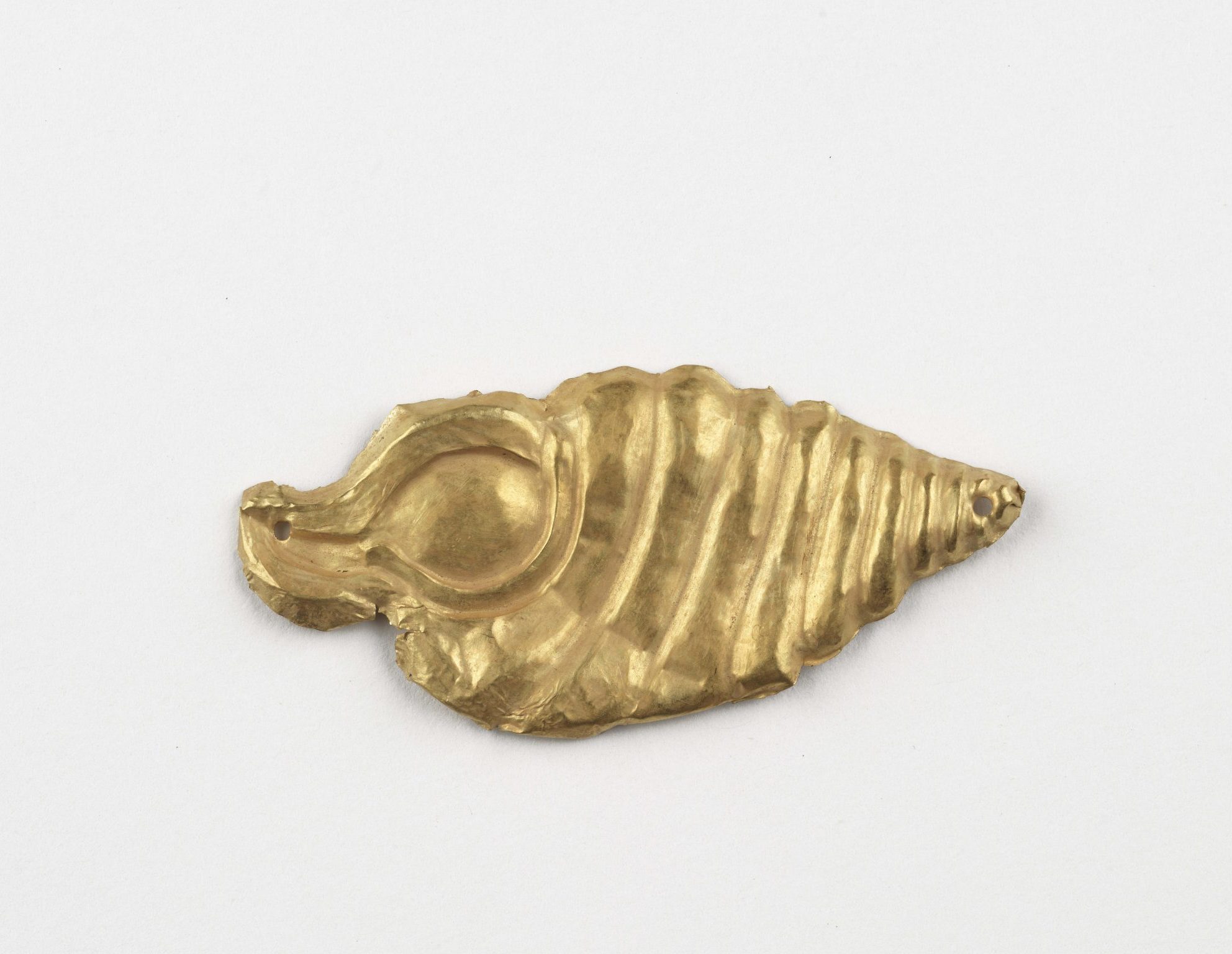
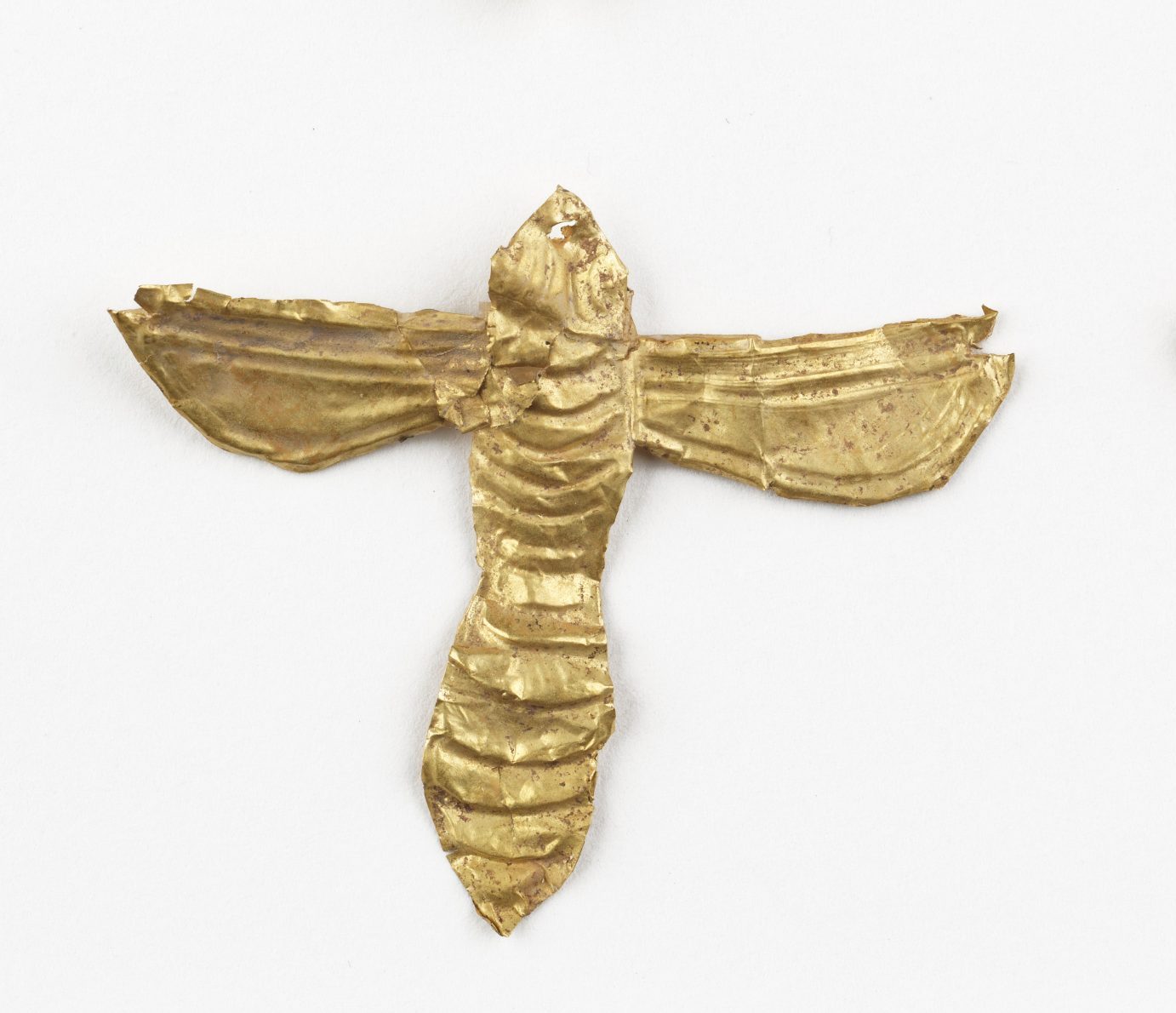
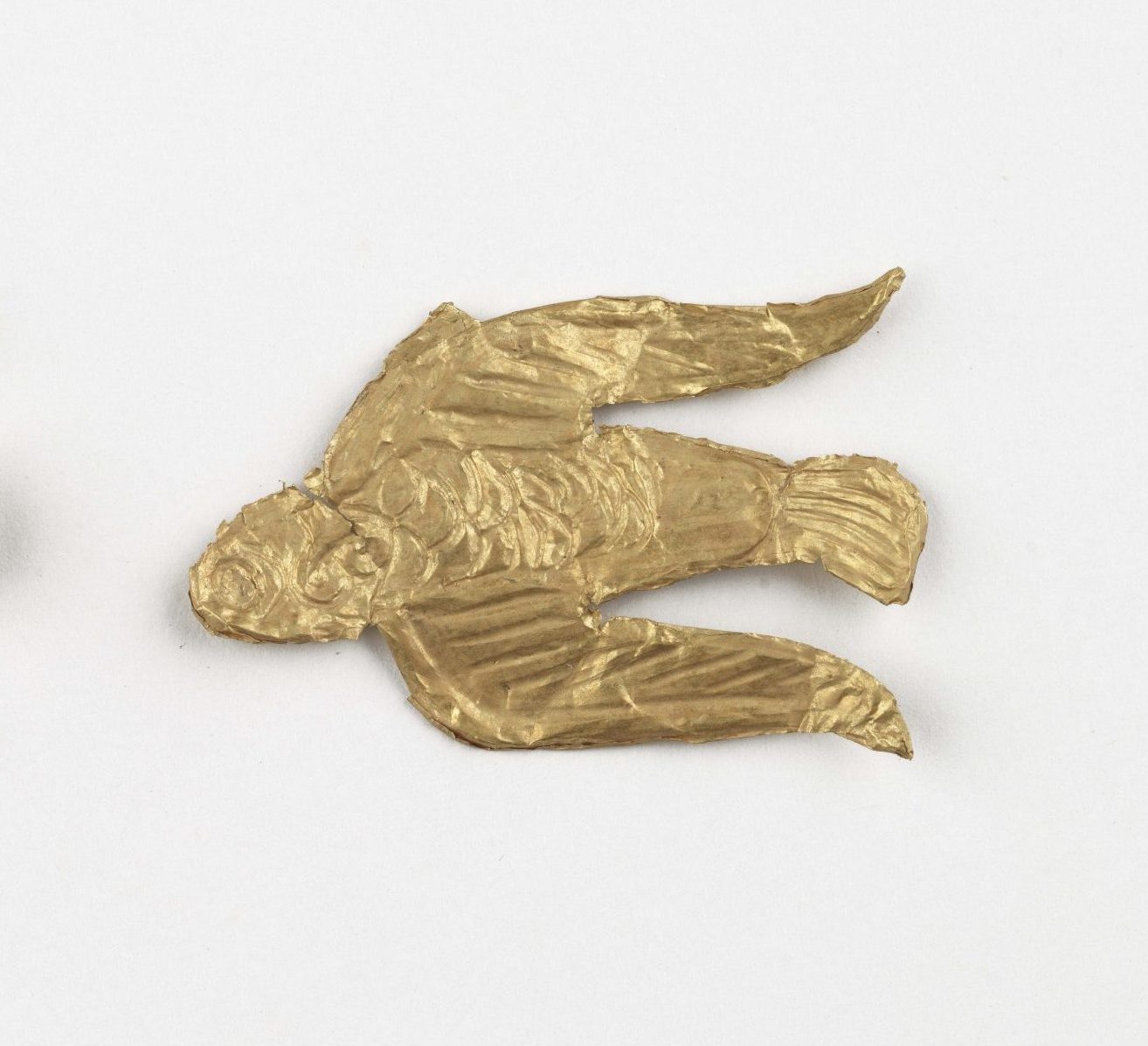
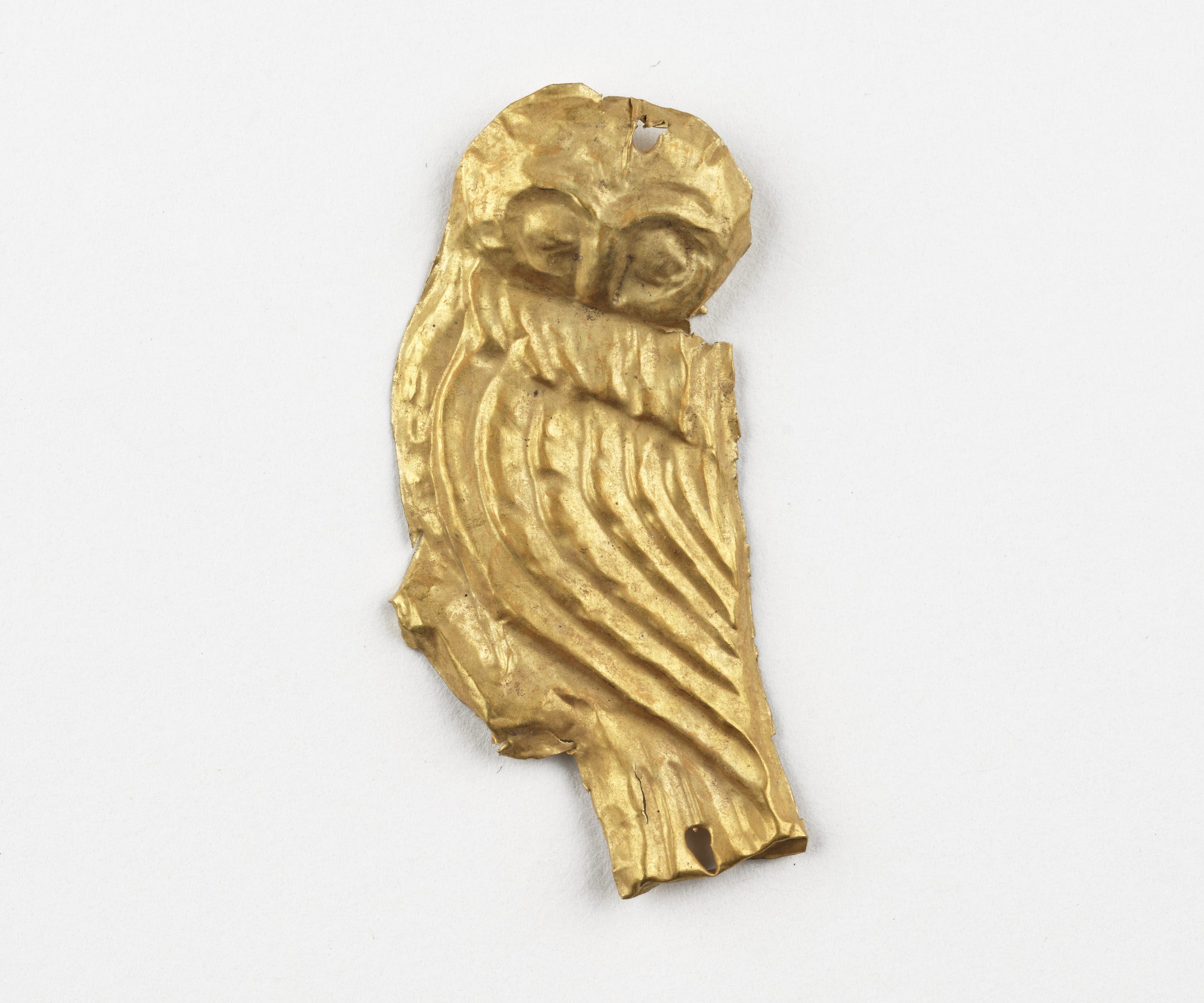
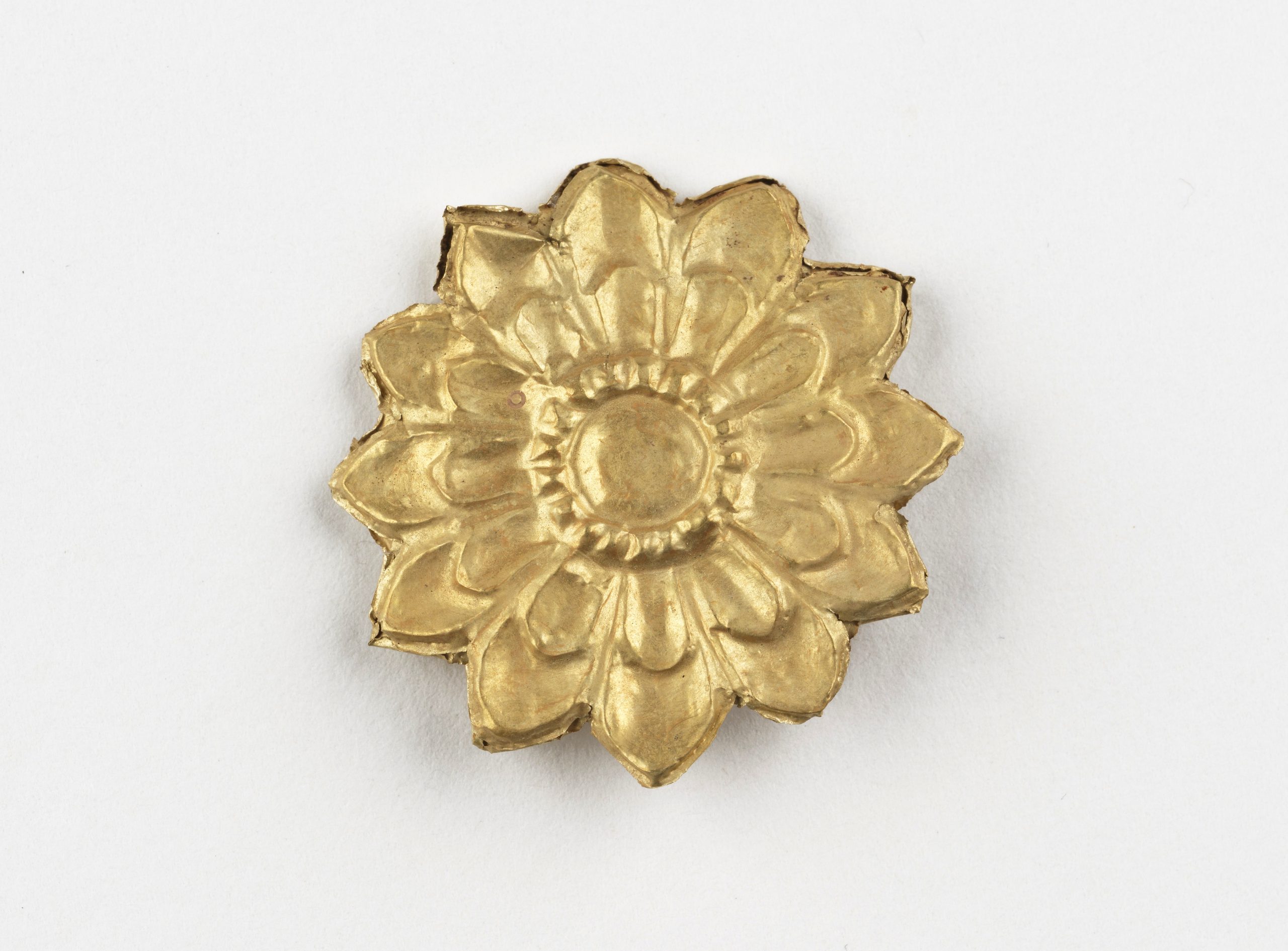
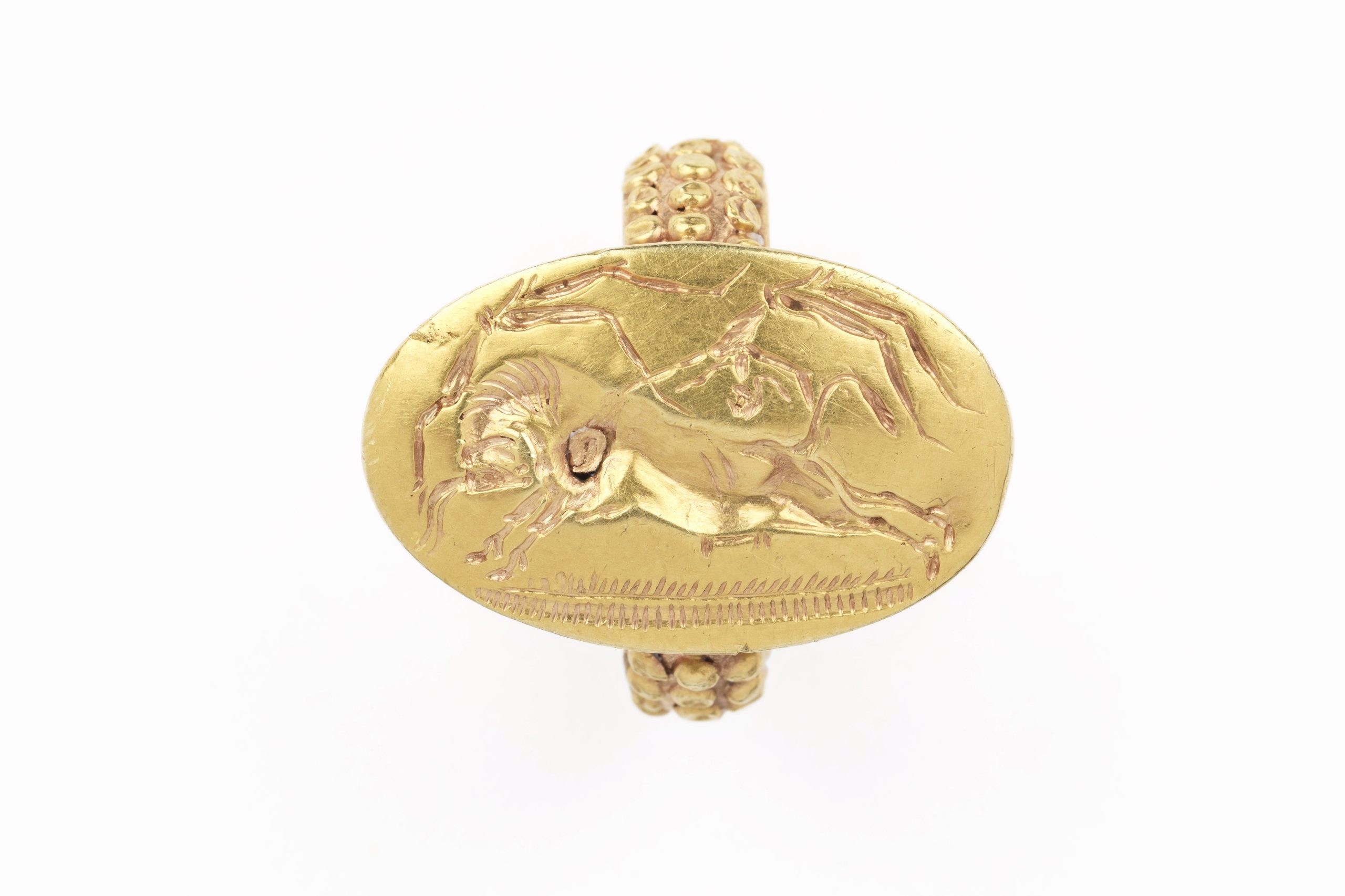
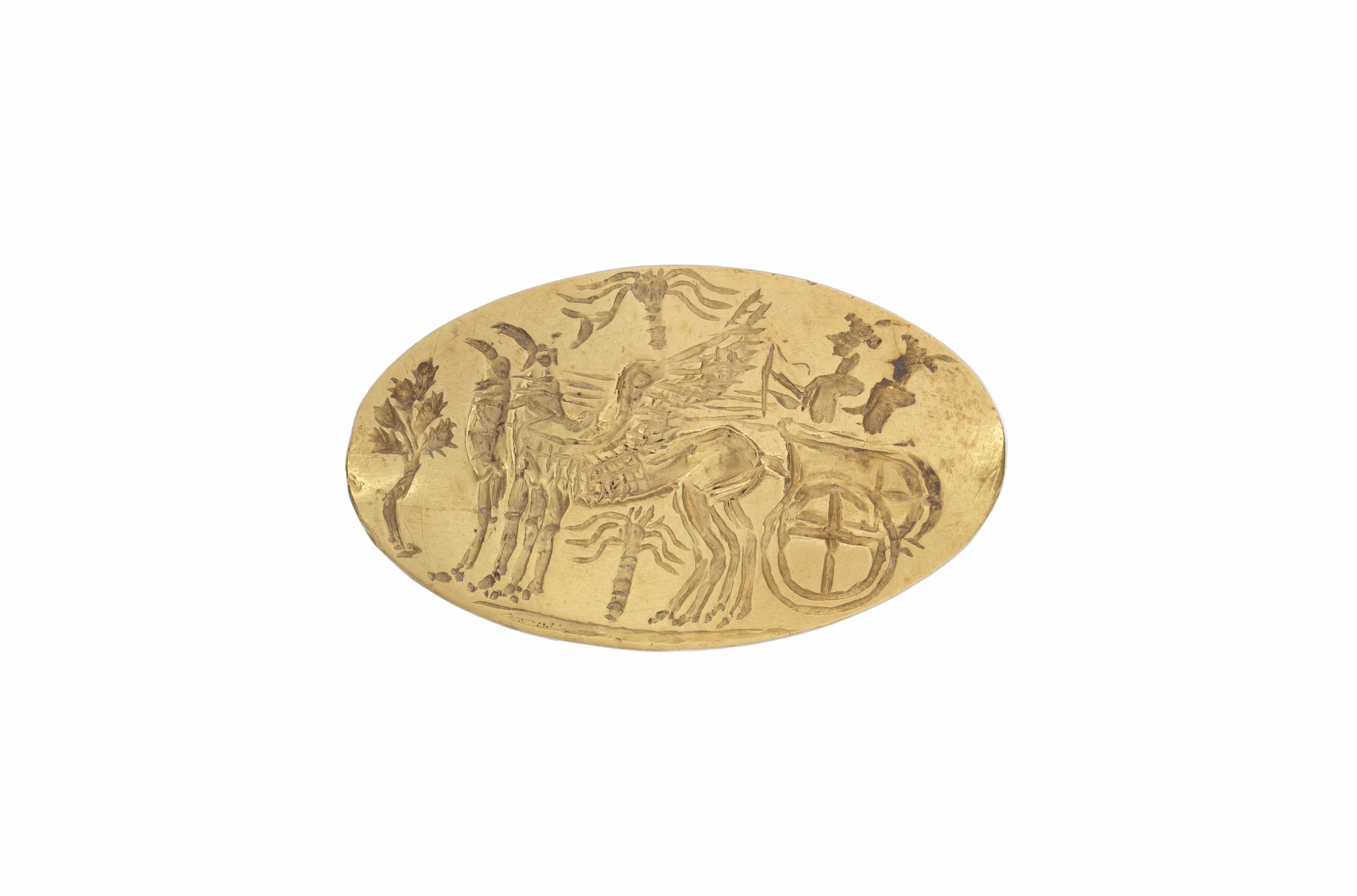
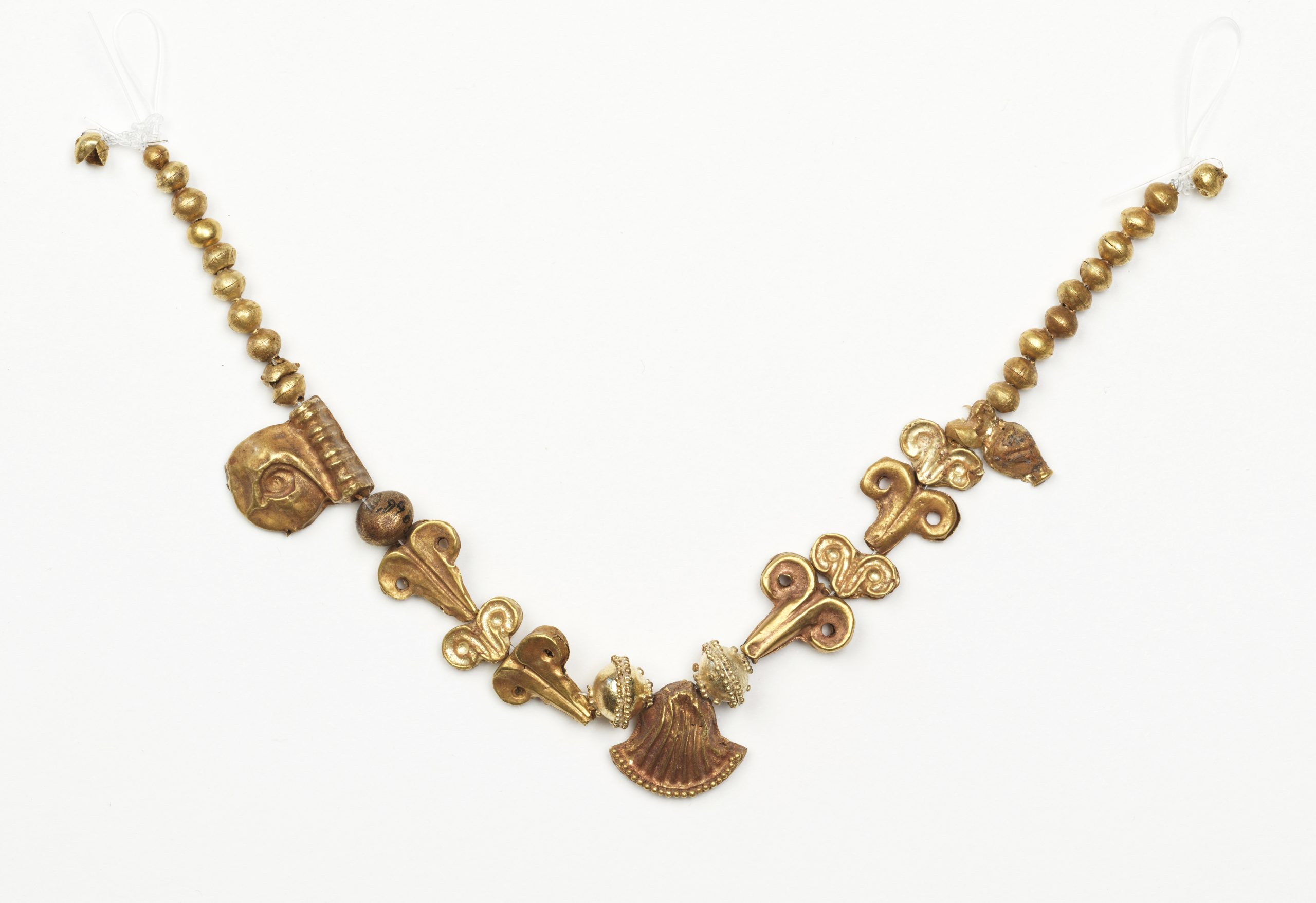
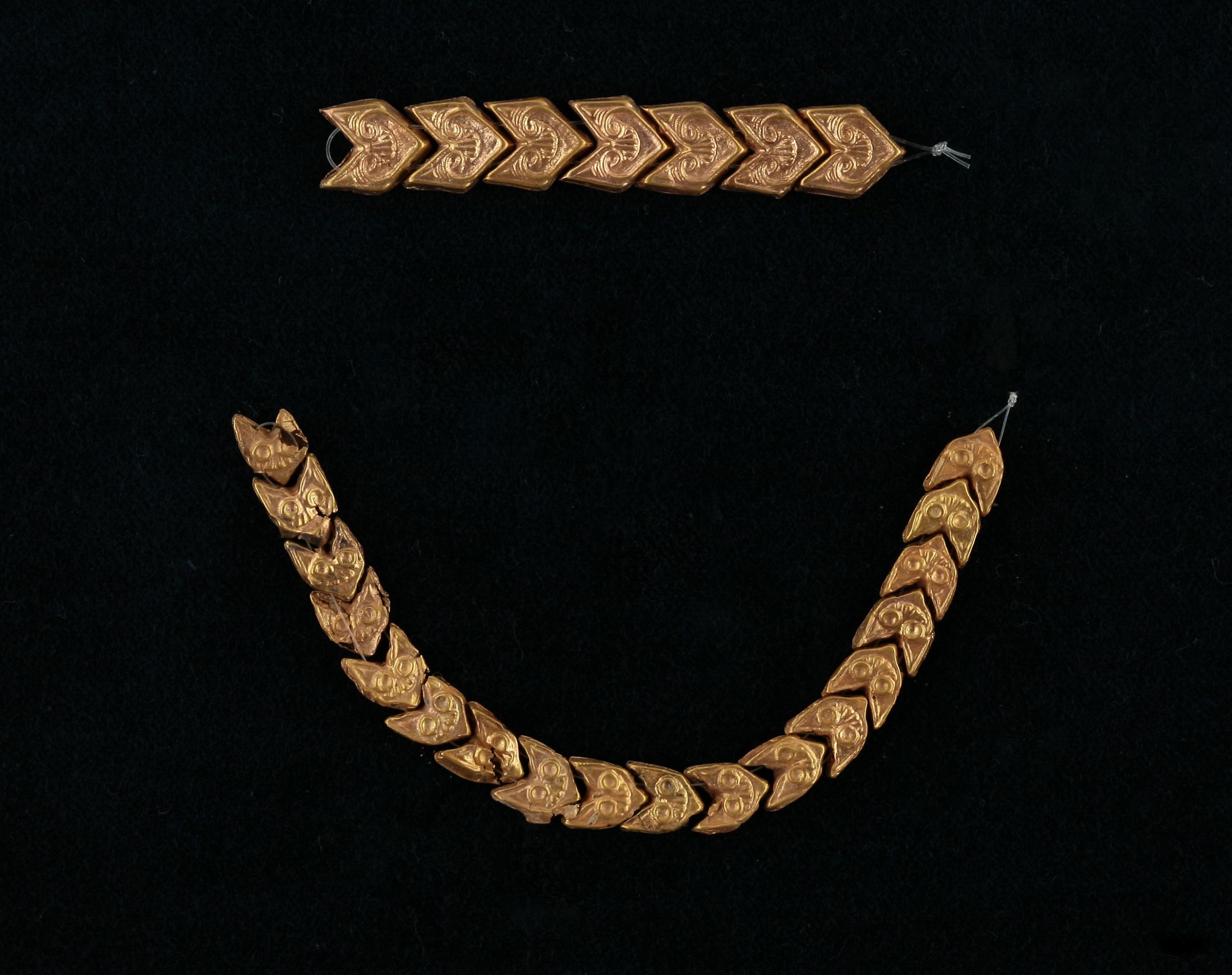
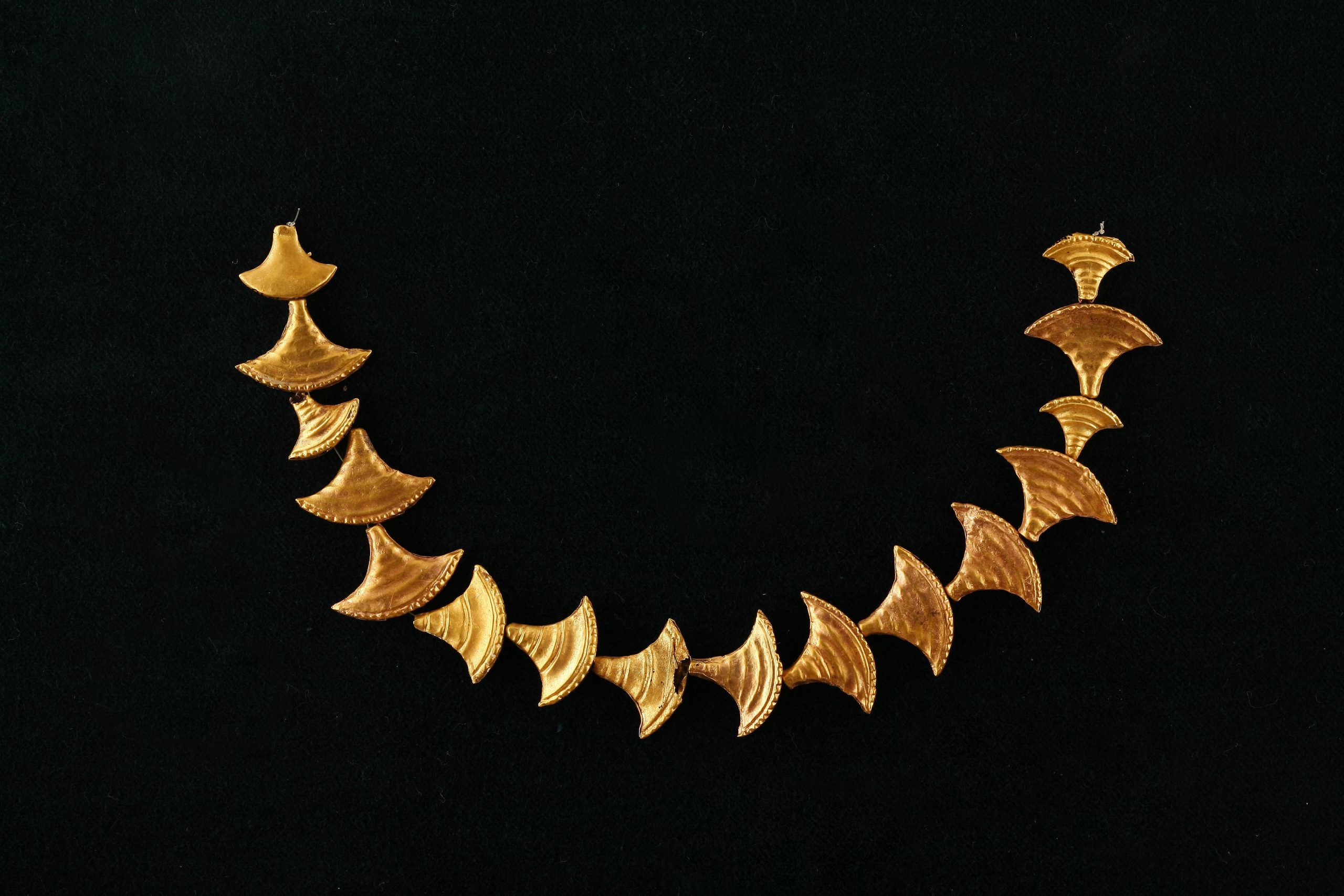
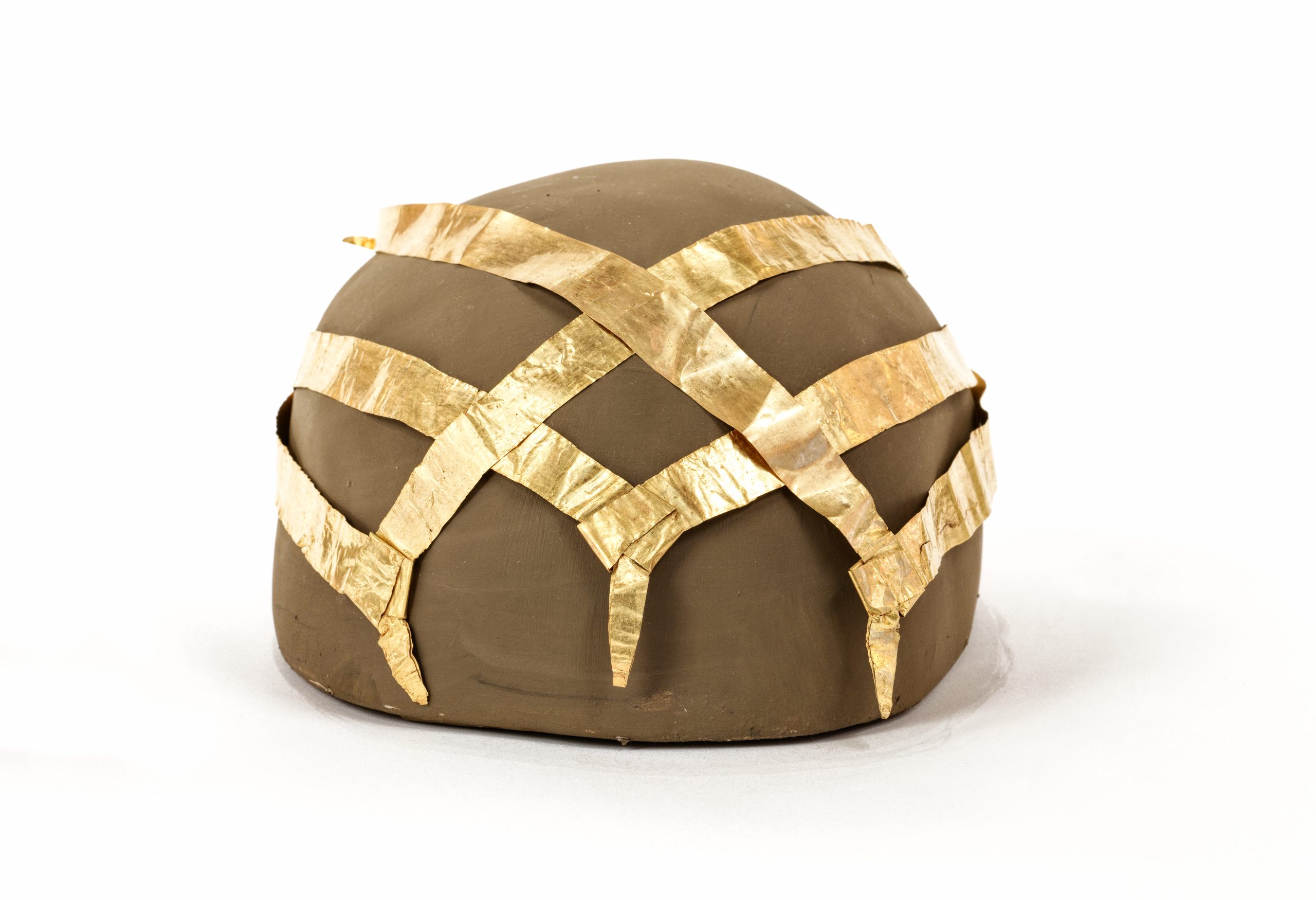
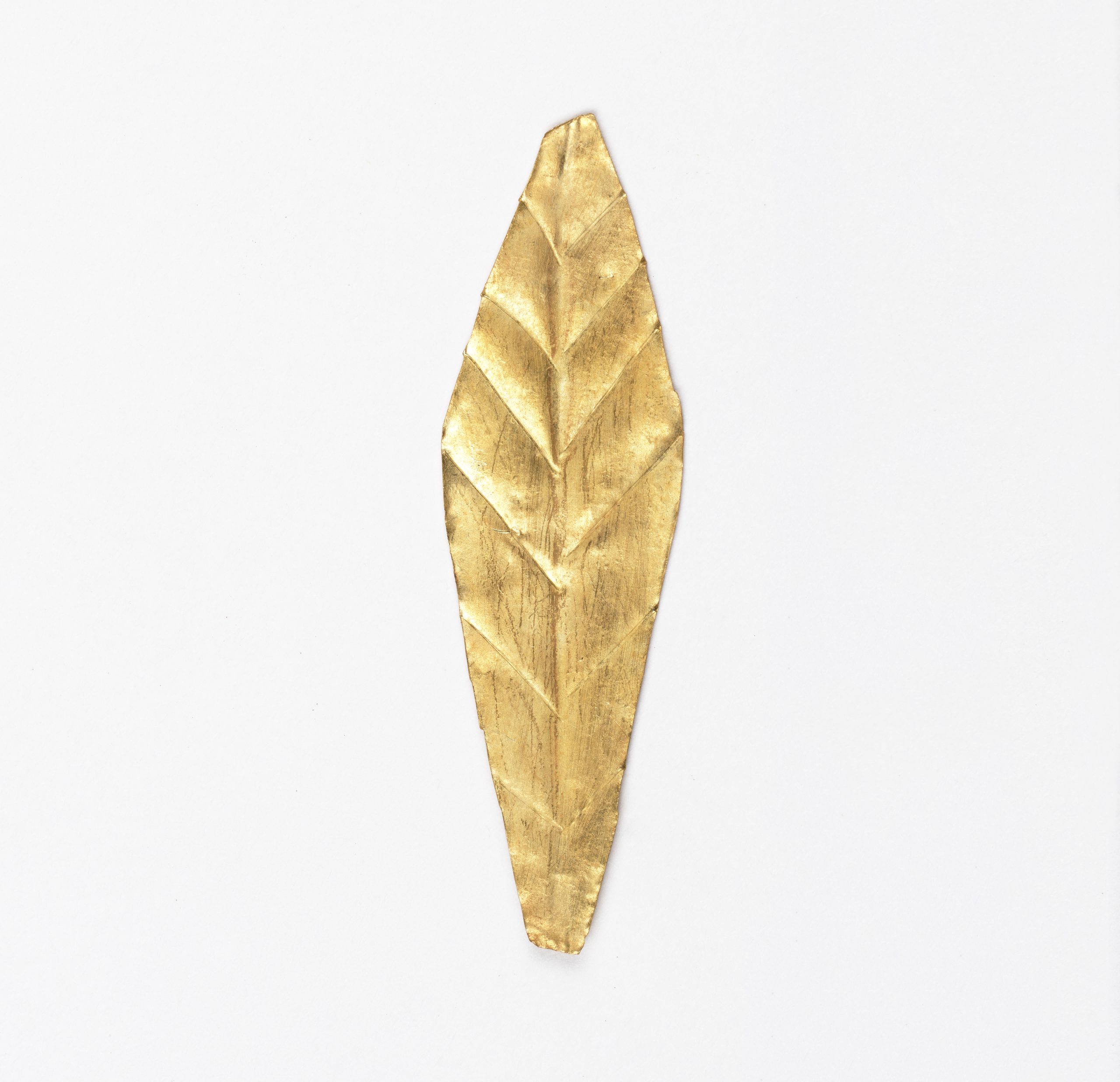
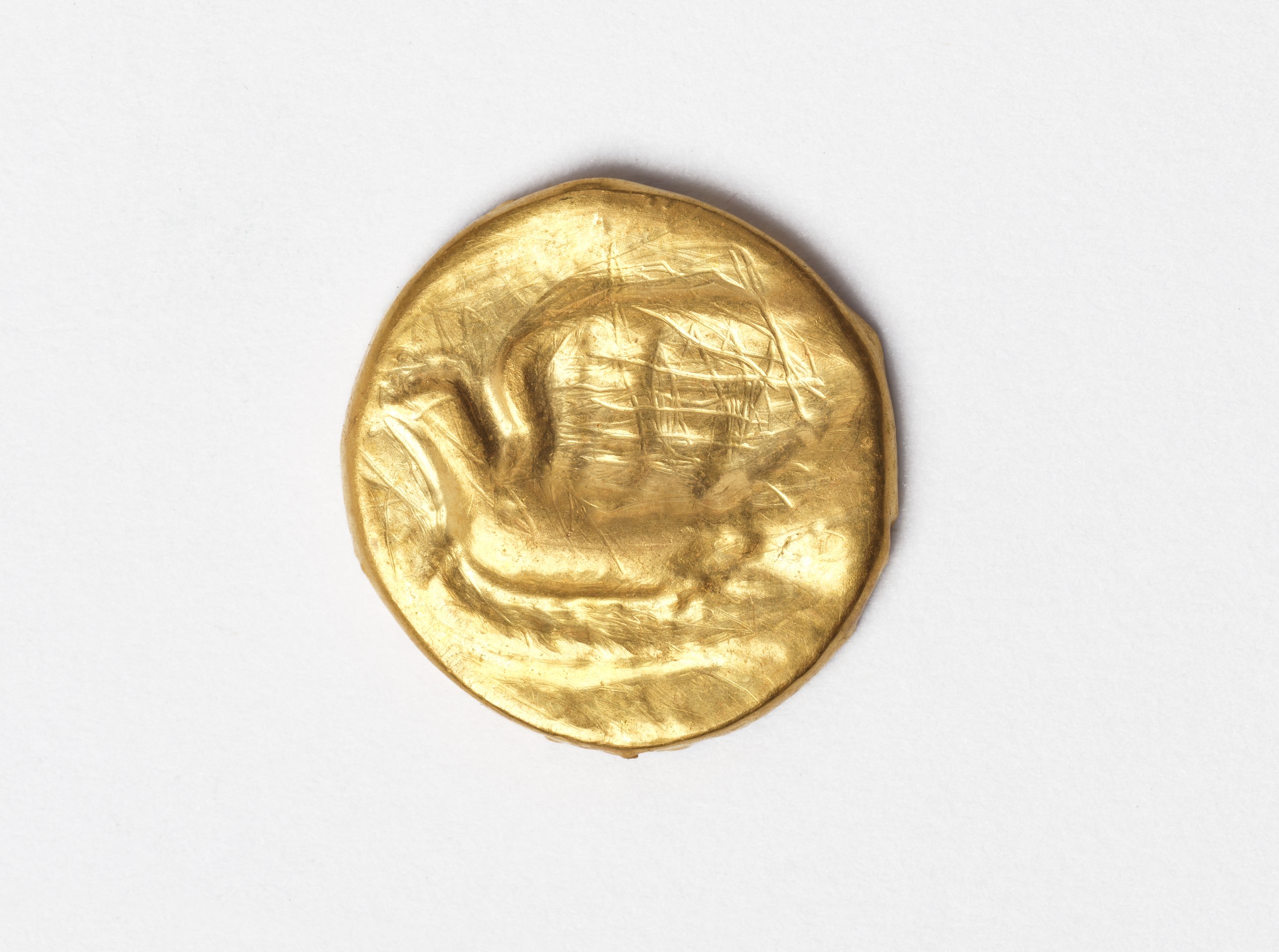
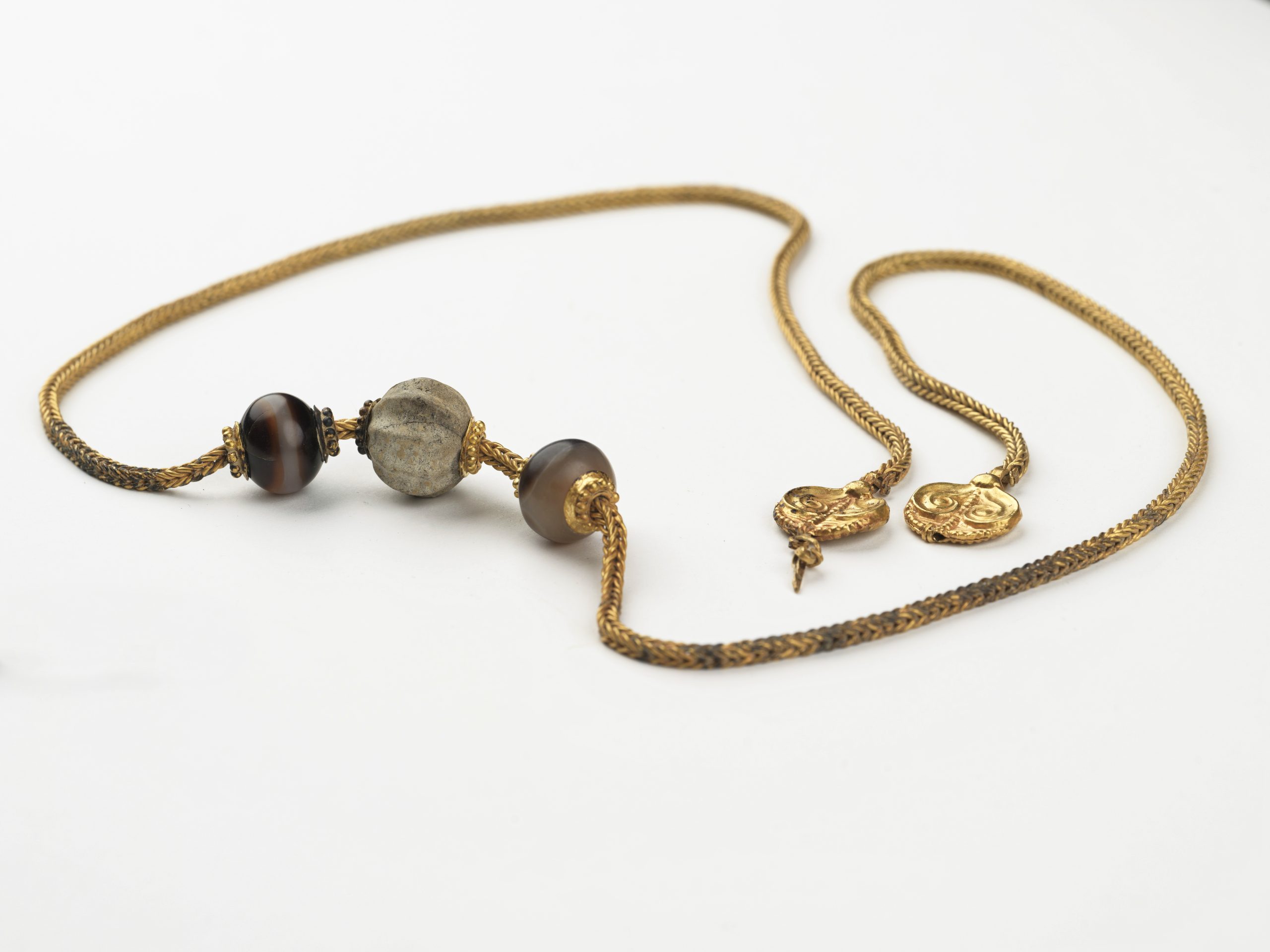
The golden works of art exhibited in the archaeological museums of Messenia originate from funerary monuments, where they were placed as grave offerings for the deceased. Most of them date to the Mycenaean period.
Skilled craftsmen rendered embossed and hammered figures, scenes, and decorative motifs on extremely thin sheets of gold or on the bezels of signet rings. Among the most outstanding are the gold grave goods from the shaft grave of the Griffin Warrior at Ano Eglianos, from the Mycenaean tholos tombs of Peristeria, and from the chamber tombs of the Mycenaean cemetery at Ellinika, Thouria.
Many of these objects were sewn onto the garments of the deceased; they bear religious symbolism and express the hope for the soul’s rebirth.
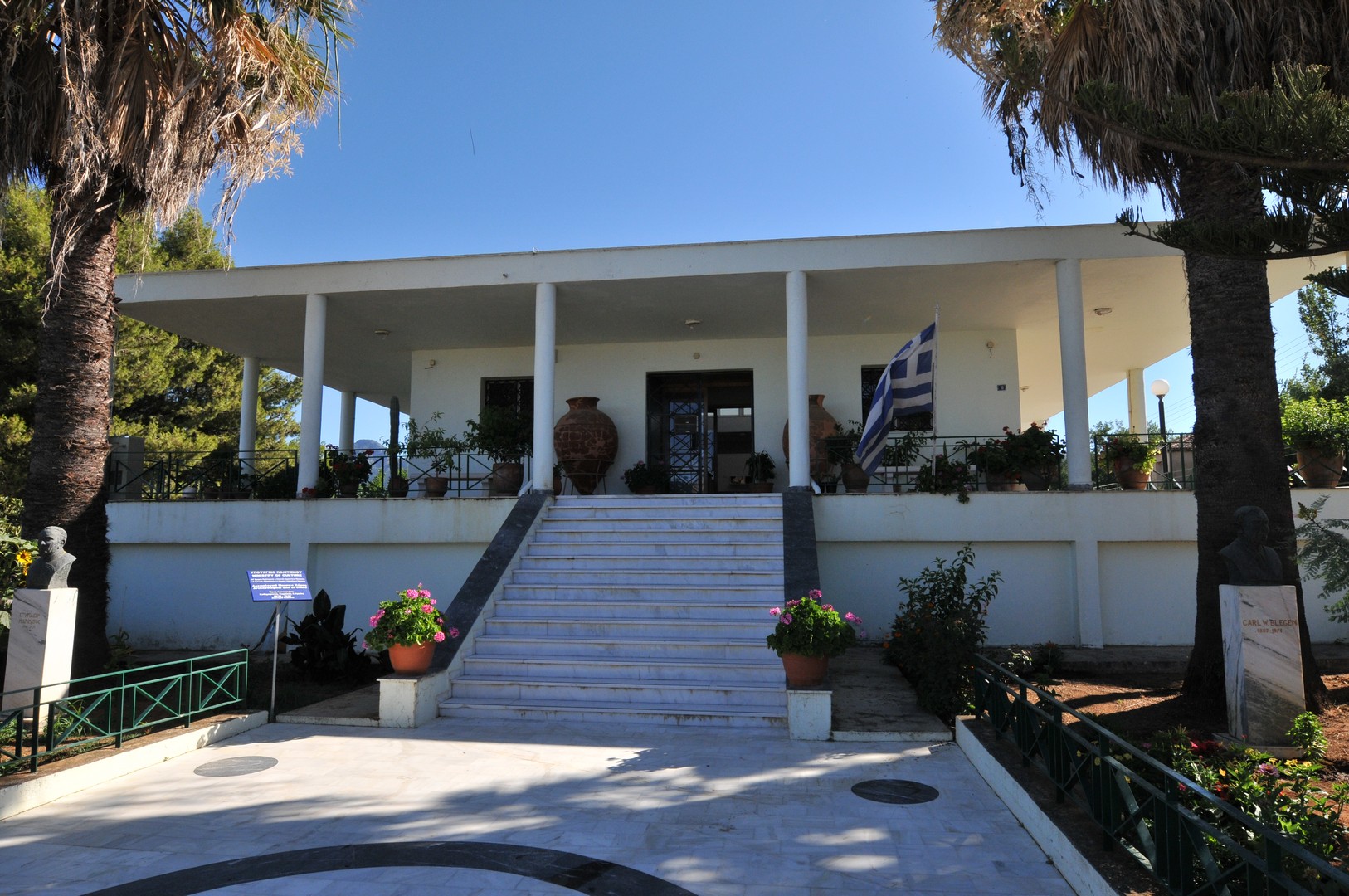
At present, these treasures are exhibited at the Archaeological Museum of Messenia in Kalamata and the Archaeological Museum of Pylos. The completion of the building renovation and redisplay works at the Archaeological Museum of Chora is eagerly awaited, as it will house the golden grave goods from Peristeria and the Griffin Warrior’s tomb.