Church of the Taxiarchs of Kastro Polichni
Project Title: Restoration of the Church of the Taxiarchs at Kastro Polichni and its Fortified Enclosure
Operational Programme:
“PELOPONNESE 2021–2027”
Project Implementing Authority:
Ephorate of Antiquities of Messinia
Total Budget:
€802,493.60
Fund:
European Regional Development Fund (ERDF)
Operational Programme: “Peloponnese 2021–2027”

In 2021, the project entitled “Restoration of the Holy Church of the Taxiarches at the Castle of Polichni and its Fortification Enclosure” was included in the National Strategic Reference Framework (NSRF) 2021–2027. The total project budget amounted to €802,493.60, and its implementation was carried out by the Ephorate of Antiquities of Messinia through the method of works carried out by the administration (direct labour). The works commenced in August 2021 and were completed in September 2025.
Main Objective of the Project
The main objective of the project was the restoration and adequate structural reinforcement of a landmark monument of the wider area, in order to address its serious structural problems.
Description
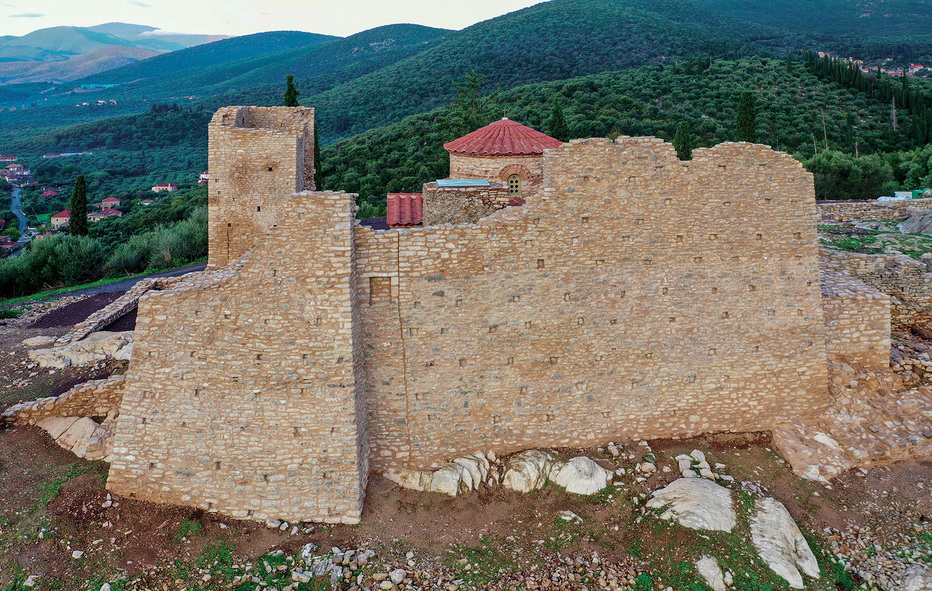
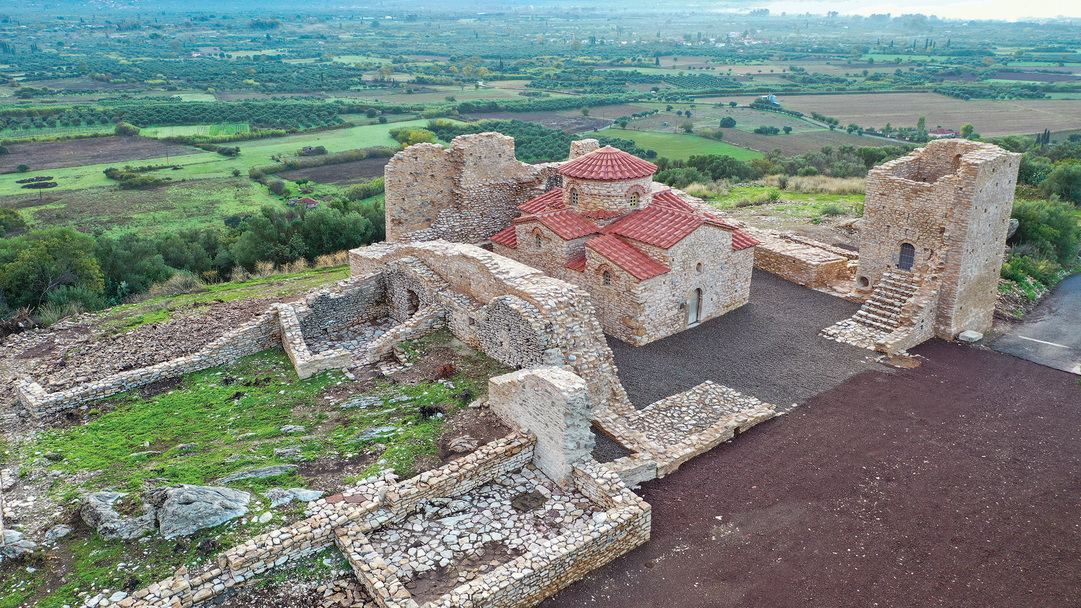
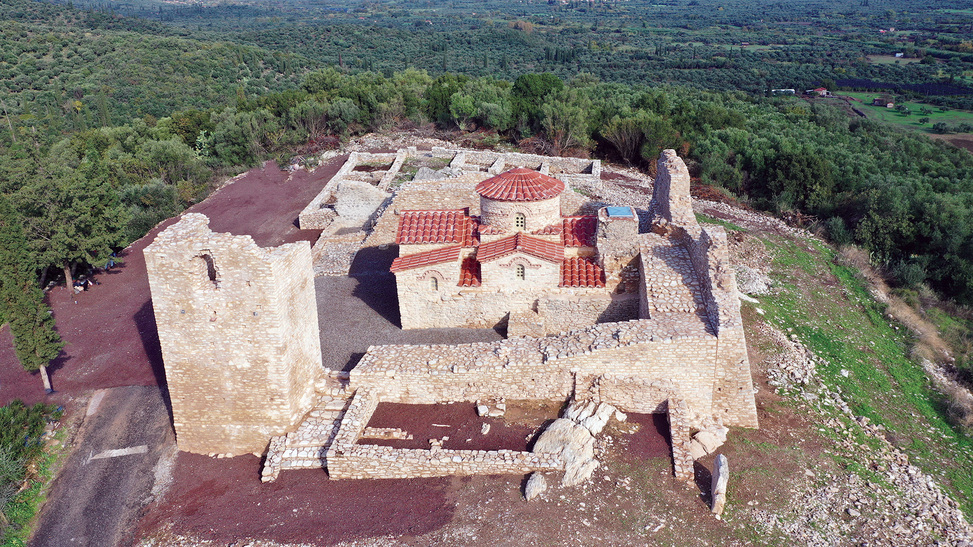
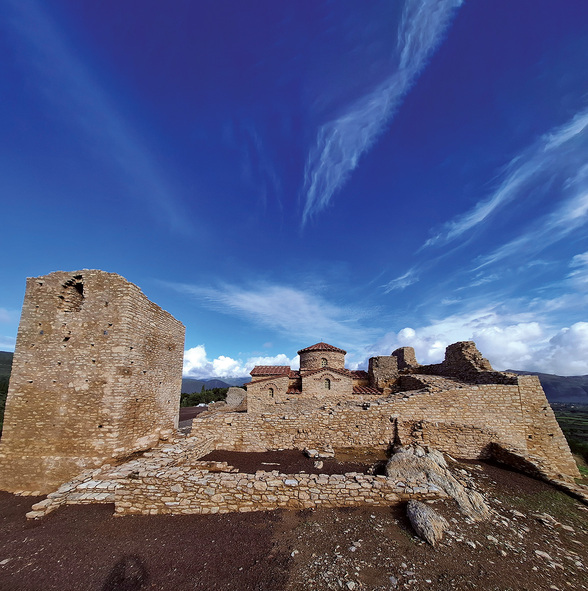
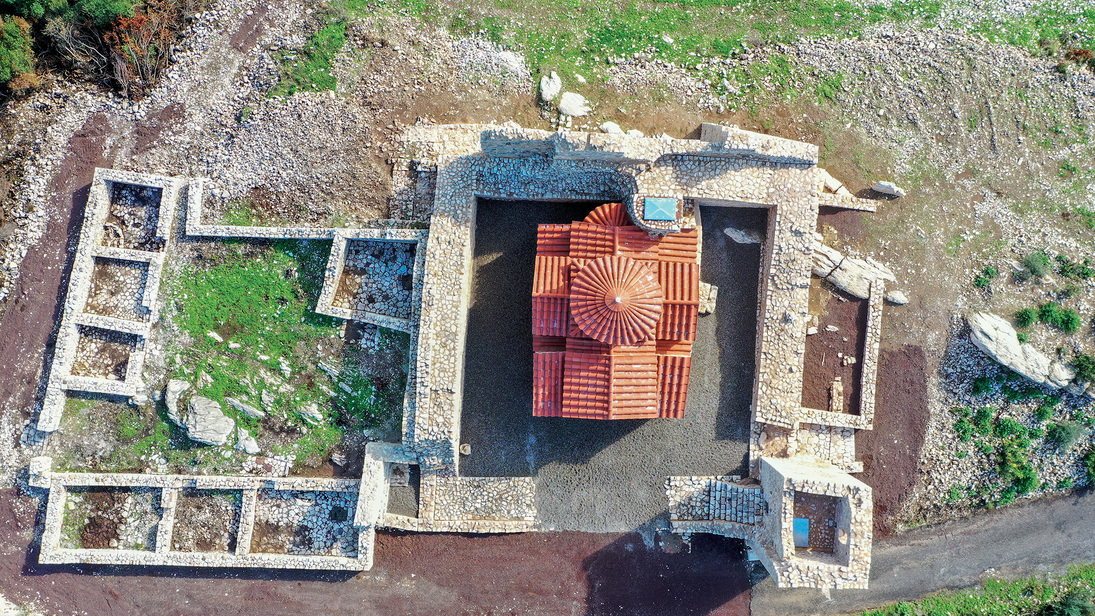
The Holy Church of the Taxiarches at Polichni, dating to the late 10th century, rises on the summit of a hill with panoramic views over the plain of Upper Messinia, north of Meligalas. It belongs to a rare variant of the cross-in-square church type with a contracted western arm of the cross. To the east, a semi-cylindrical apse projects outward, while to the west a narthex contemporary with the main church is formed.
The dome has a cylindrical drum and is internally reinforced by two massive intersecting ribs, a feature unusual in Byzantine churches of the Greek mainland.
During the late Ottoman period (late 18th century), most probably in the aftermath of the Orlov Revolt, the church underwent large-scale alterations following a destructive event that resulted in the severe deformation of the southern wall and the complete collapse of the southern arm of the cross. During this phase, a later internal wall was constructed parallel to and in contact with the original one, while the remains of the southern arm were almost entirely blocked up. At the same time, the original vaults were supported with reinforcing arches, and externally the cross-shaped roofing system was completely abolished through the peripheral raising of the walls, in order to form a single unified roof, from which only the dome protruded.
In 1929, a massive timber-roofed narthex was added to the west of the church, significantly altering the monument’s original proportions. Wall paintings dating to the late 18th or early 19th century are preserved in parts of the main church and on the principal face of the built iconostasis, while minimal traces of the original painted decoration were revealed on the spherical triangles and in parts of the dome.
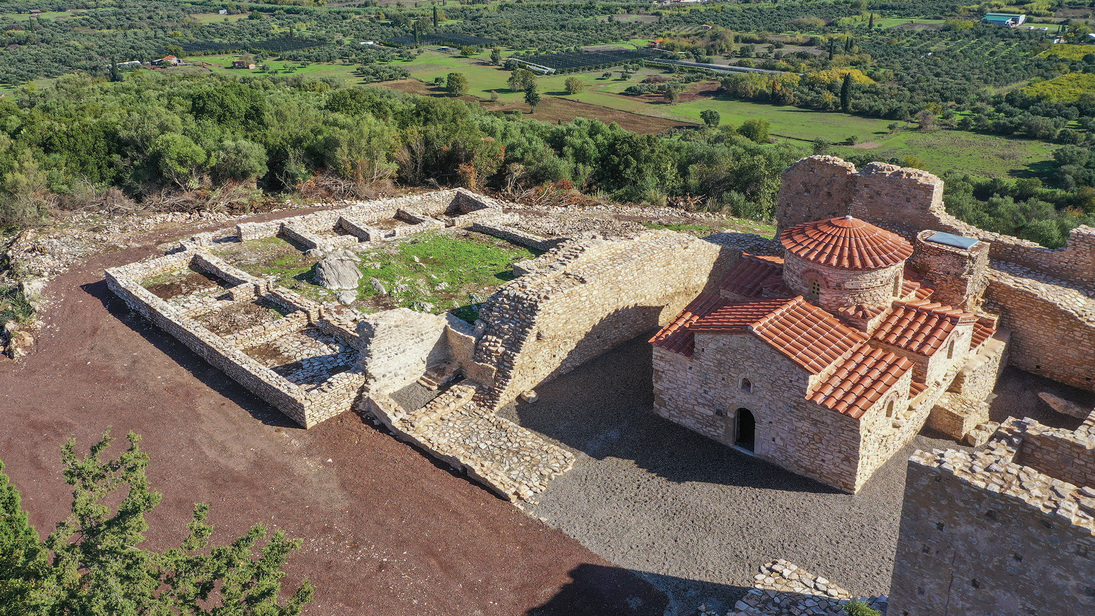
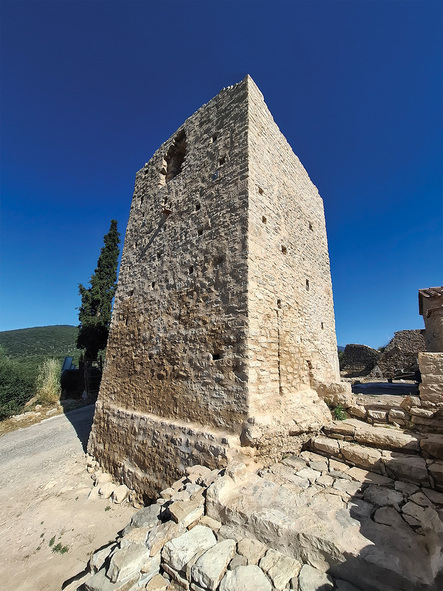
Surrounding the church are the remains of a small Frankish castle, identified with the Castle of the Archangel mentioned in historical sources, which underwent numerous alterations and interventions throughout its long history. The castle has a quadrilateral layout, measuring approximately 22 × 26 m, and appears to have been reinforced at its corners with large tower-like projections. The best-preserved of these is located at the southwest corner of the enclosure and was originally open towards the interior. In a later period, immediately after the Orlov Revolt, it was converted into a regular tower, as confirmed by the engraved date 1778 on the arch of the elevated entrance at the centre of the northern side.
Remains of a complex of timber-roofed buildings arranged around an enclosed courtyard survive to the north of the enclosure. These structures most probably served as the main residential area of a small monastic community during the period when the monument functioned as a monastery, from the late 18th century until 1940, when it was permanently abandoned.
Pathology
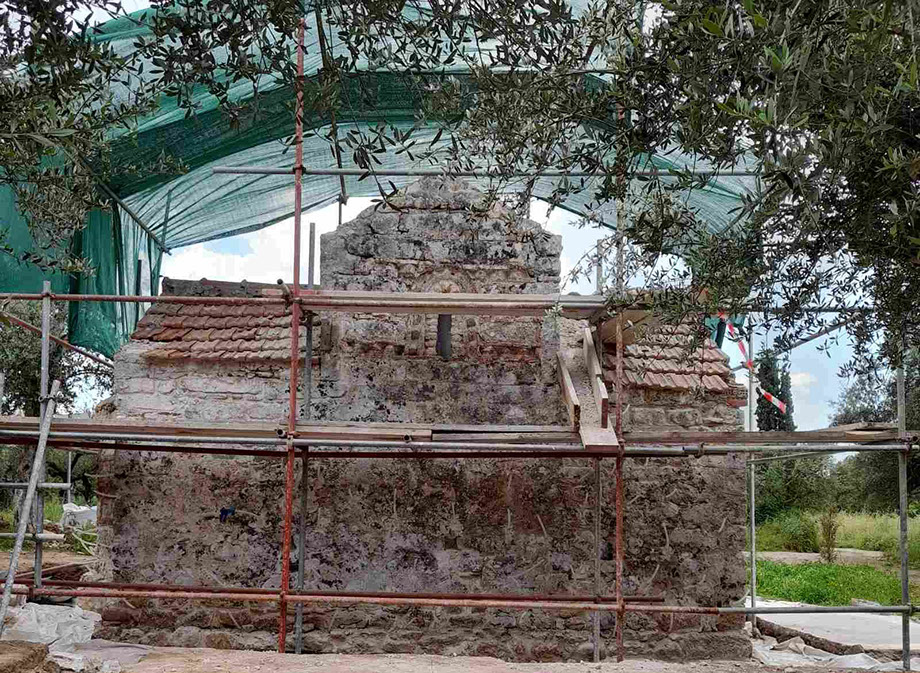
The monument suffered from severe structural problems related to long-term abandonment, later interventions, and inadequate maintenance, which significantly degraded its archaeological value. Furthermore, due to insufficient waterproofing and localized deterioration of the external pointing, serious moisture problems were evident in the interior. Additional damage to the painted decoration included the covering of wall paintings with lime mortars, salt efflorescence and soot deposits, deep and superficial cracks, as well as flaking and detached surfaces.
Works Carried Out
The project included the structural consolidation and morphological restoration of the church, the southwest tower, and sections of the fortification enclosure; cleaning works and trial archaeological trenches around the enclosure, in its western part and locally between the church and the enclosure; works for the arrangement and enhancement of the monastic cell complex; the installation of an informational sign; and the production of an informational leaflet.
Benefits
Following the completion of the restoration and enhancement works, the Holy Church of the Taxiarches and the small Castle of Polichni now form part of a highly significant cultural route in the area of Upper Messinia. The project contributes to the upgrading of the region by returning to the public an important diachronic archaeological site that strengthens the cultural identity of the local community, promotes tourism, and creates opportunities for sustainable development for local residents.